
December Substack | what will we take with us?
Reflections, events and opportunities for our community

Hello there,
We’re nearing the Northern Hemisphere’s shortest day and longest night of year. I’m feeling so many things. Fear, courage, tenderness, love. As we creep into deep midwinter, toward a new year, I’m reflecting on a year of being part of Culture Declares Emergency. This community has given me so much life. It has allowed me to grow in ways I didn’t image, to experiment and play, to hold space and to gather people, ideas, practices. I’ve been so inspired by all of you.
Throughout these frightening, unravelling days, one thing gets truer and truer: we need community more than ever. Community is where and how we can care for each other and build resilience in a time of ecological and social breakdown. Community is not a metaphor: it is the real, gorgeous, flawed, messy humans in our lives, the familiar faces, the virtual and physical spaces we collectively inhabit, the streets, fields and rivers that we love with every inch of our being, the rituals and routines that ground us, the conversations that shift our days, the permission to be our whole selves, the sense of belonging and safety we slowly cultivate.
A longer newsletter this month: a reflection of last month’s gathering on loss, grief, and remembering, an update from the National Emergency Briefing from our brilliant CDE North East coordinator, Julie Ward, and a few incredible opportunities and readings that I’ve come across.
I’ll wrap up with quote that our National Coordinator Karine shared with me, from Rebecca Solnit’s ‘No straight road takes you there’.
“Like refugees leaving a place, we are leaving a time. What should we carry with us? … One of the questions that arises for me is what will sustain us through this period. We will need stories more than ever. Those of us alive in this time … must become the holders of the baselines, and future generations must pick up these stories when we lay them down, our journey done. If we don’t remember how things were, we cannot endeavor to restore what has been broken.”
Looking forward to connecting with you all in the new year,
Tesni (CDE Communications and Events Coordinator)
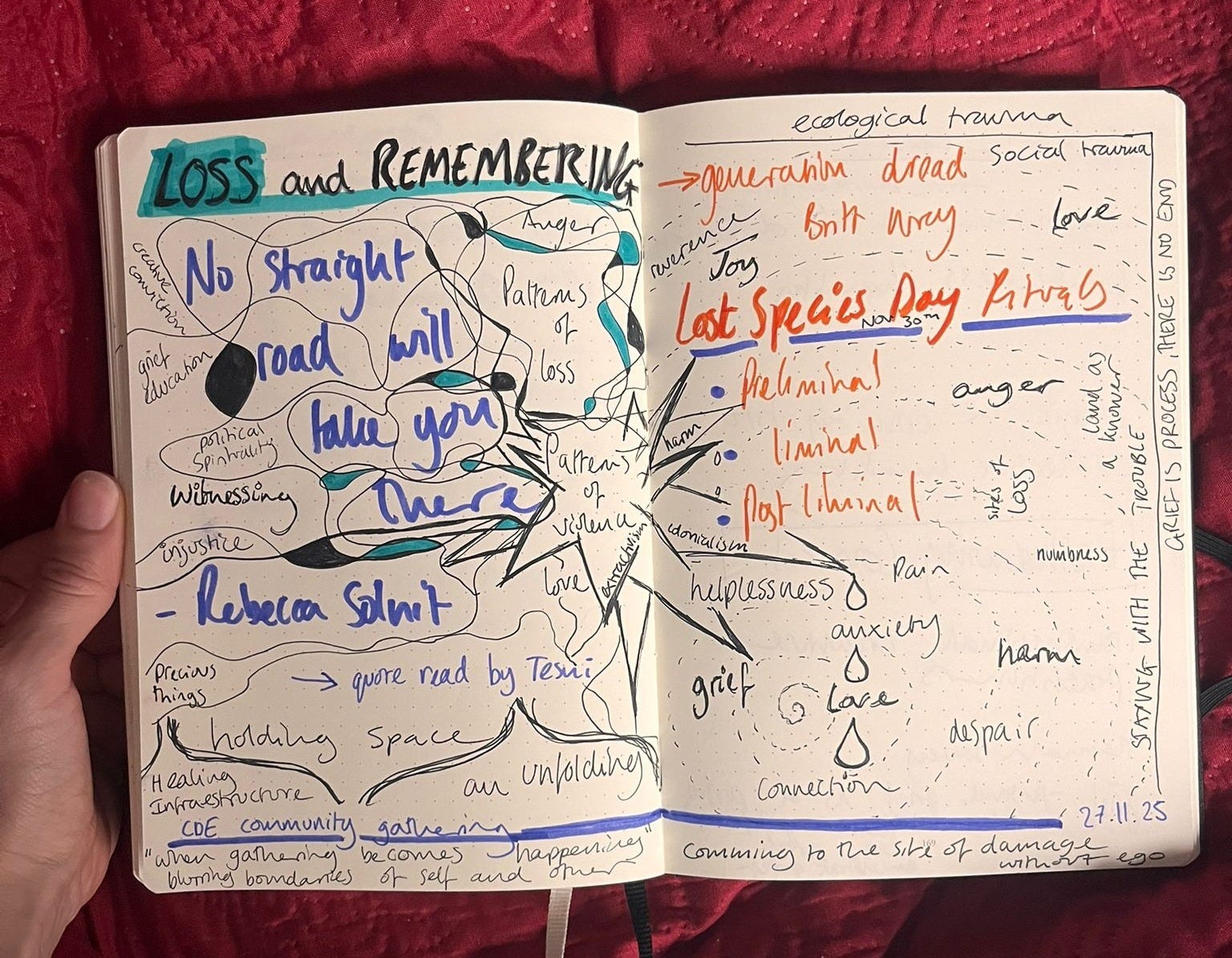
Reflections from our gathering on loss and remembering
Last month we gathered during our monthly community breakfast to talk about loss, grief and remembering. You can watch the recording here.
Whilst curating the session, I noticed that two sides of loss were dancing together. On one side is the need to accept loss as an inevitable part of life. We are aching to honour and grieve our compounding losses: personal, ancestral, ecological, material, cultural. Across much of white European culture, we have let go of our collective rituals for grief, and in doing so we find ourselves untethered.
And yet, whilst we create space for acceptance and for grief, we must not lose site of the systems and structures that are responsible for driving loss. So many losses are not inevitable or natural, but are the result of state and corporate violence, of racism, colonialism, capitalist extraction, and inequality.
How to allow these two sides to dance together? How to collectively move through and tend to pain, whilst also holding structures and systems to account for their damage - and mobilising to halt further damage?
-
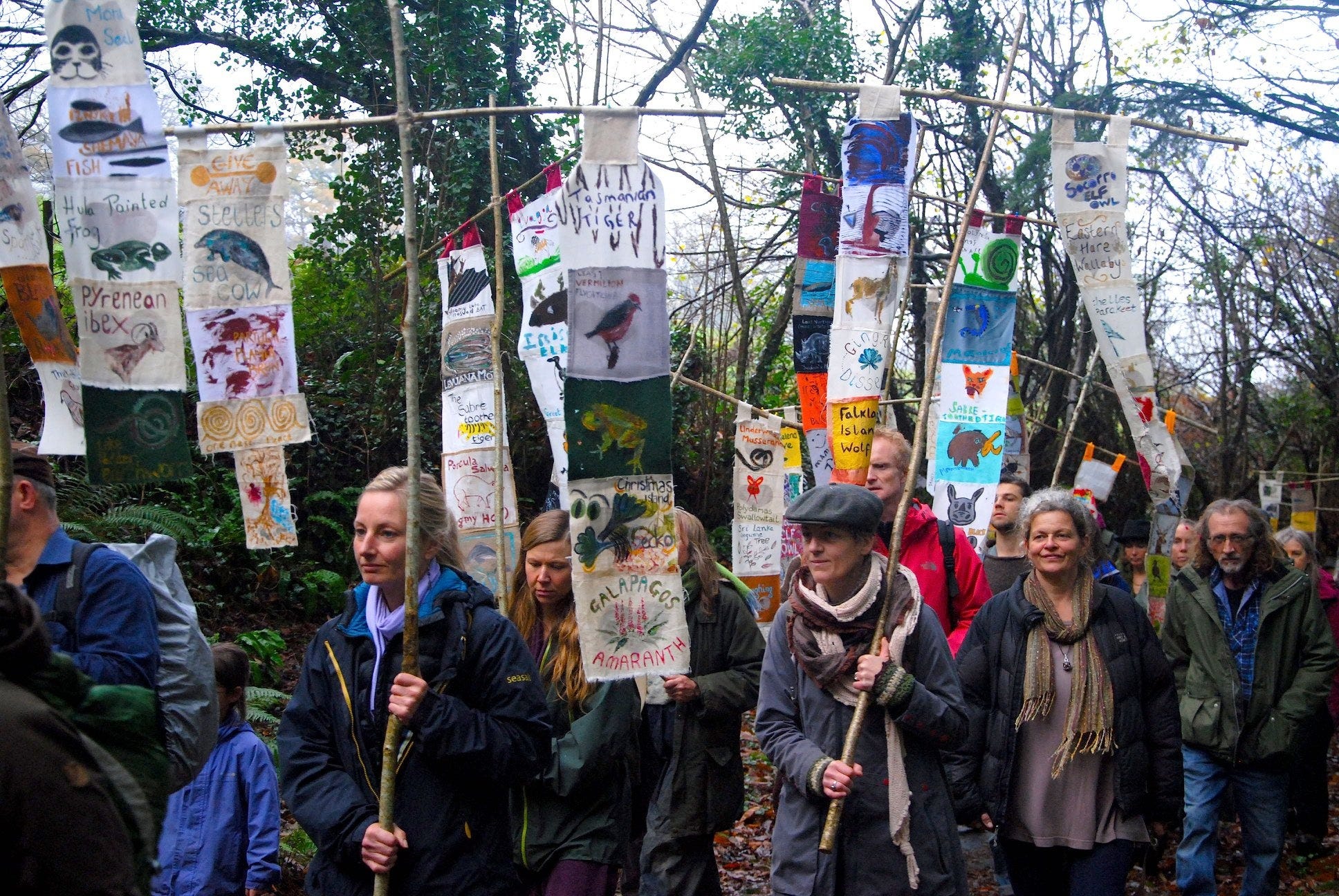
During our Breakfast, Persephone Pearl shared the story of Lost Species Day which they co-founded in 2011 after sensing that ‘loss was not evident in the political discourses surrounding climate, but was felt in our bodies and our bones.’ Beautiful imagery was shared of ceremonies, funerals, memorial sites and life cairns - contemplative spaces that allow us to say goodbye. Persephone spoke to the imperfectness of carrying Lost Species Day through the years, and the imperfectness of grief as an ongoing process.
Whilst Lost Species Day honours lost animal kin, Youngsook Choi shared her practice of researching and grieving lost sites: sites of extraction and damage, from fishing villages in Nghe An, Vietnam, wrecked by Formosa’s toxic spill, to Colliers Moss, land re-emerging on the spoil and waste heaps of Bold Colliery in St Helens. She spoke of ‘land as a knower’; the necessity of arriving to sites without an agenda, with humility. Ecological trauma is always entangled with social trauma: Youngsook reminded us of the embodied violence and social breakdown often experienced in places of industrial decline.
She founded the transnational ecogrief collective, Foreshadowing, after finding it too deeply painful to spend time in these damaged places, and needing not individualised therapy, but a collective witnessing, understanding and holding.
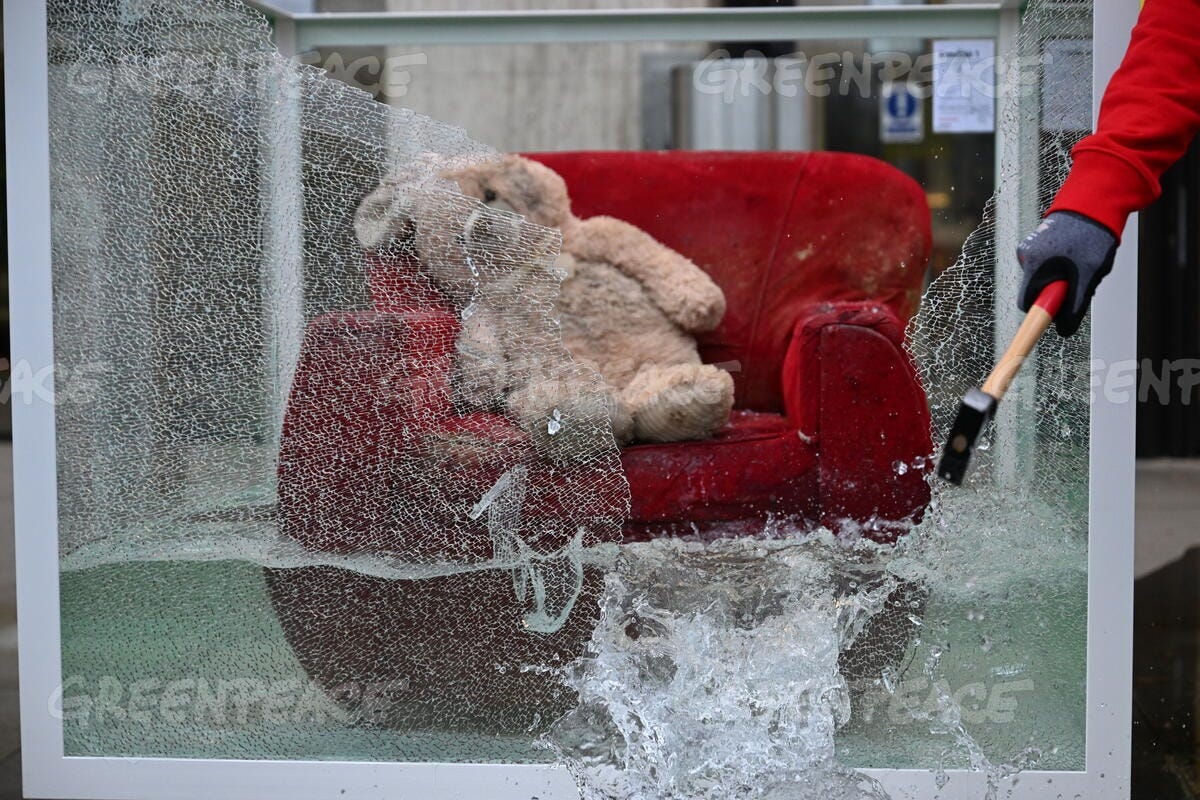
Hannah Davey spoke of the private, creative practices she engages in to ‘re-enchant and tend to the harder edges of her activist work’: ritual gatherings of precious, magical things in her hut in the woods. She found herself working with ash from the burnt Amazon rainforest whilst simultaneously experiencing the loss of her father, a moment where ‘personal grief became a portal into feeling deeper ecological grief’. Hannah also shared her recent performance art protest, Untold Stories of Climate Loss and Damage, a collaboration between Greenpeace activists and Filipino communities. Belongings - ‘personal treasures’ - wrecked by typhoons were collected, encased in glass, and taken to Shell’s London HQ to highlight how the oil and gas industry is fuelling the destruction of lives and livelihoods.
Finally, we heard from Merlyn Driver, a nature-focused musician who spent a childhood on Orkney amidst the evocative sound of curlews, a sound so joyous he remembers wanting to ‘fly out of his window and join them’. Merlyn later worked with the RSPB to create Simmerdim: Curlew Sounds, a multi-artist project inspired by the now-endangered curlew. ‘Musicality is not only the domain of humans’, he said, ringing back to Youngsook’s reminder of ‘land as knower’. He has created many multi-species collaborations, including The Last Scream, working with biologists and sound recordists in the Amazon to archive recordings of extinct species.
We closed to the strangely haunting sound of the Admirable Red-Belly Toad.
Events
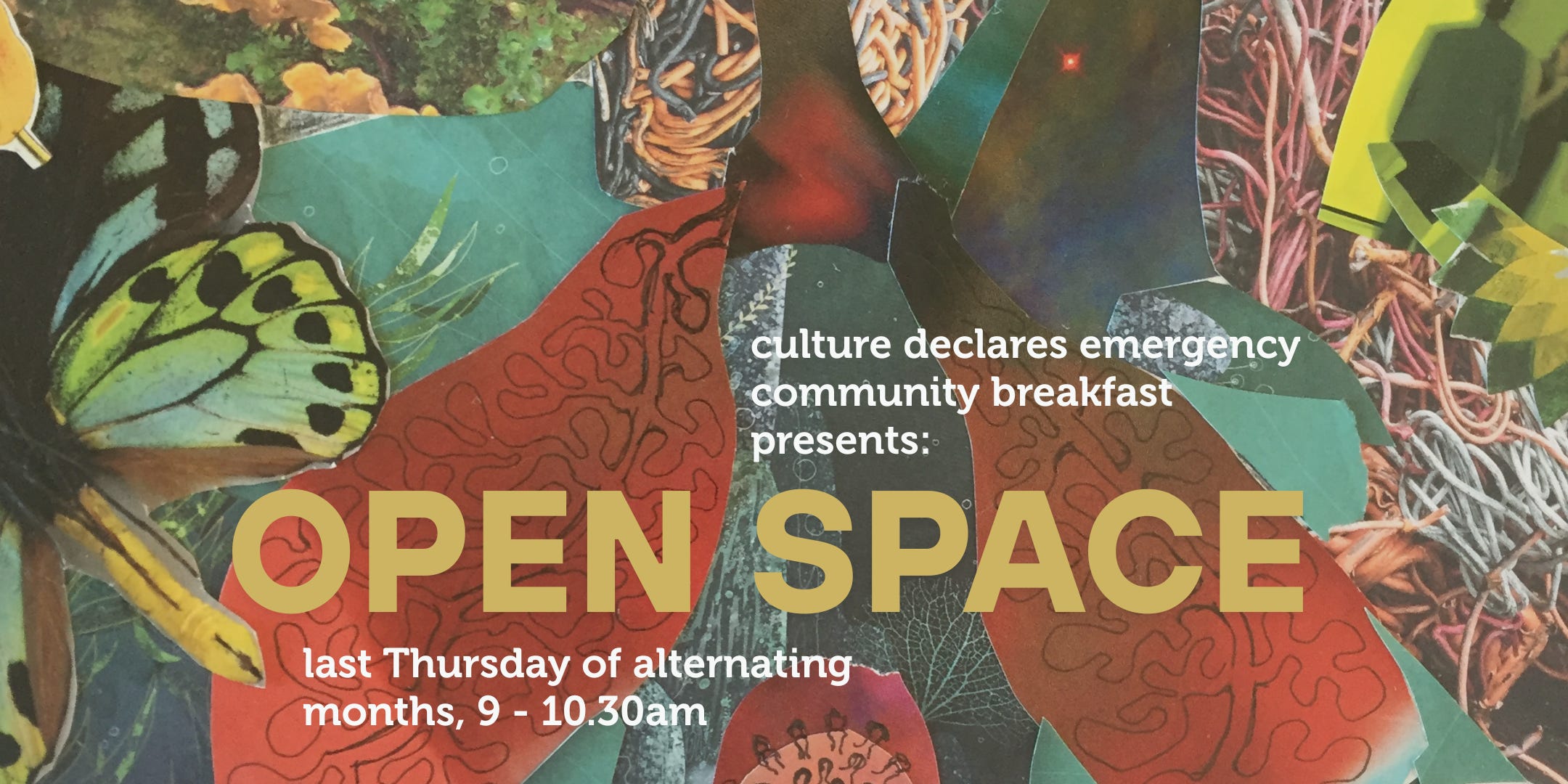
Open Space - Thursday 29 January - 9am
We’re taking a break from running events in December, but we’ll be back with an open space on 29 January. This will be an opportunity to:
Introduce yourself, your organisation, your project or your practice
Ground ourselves in our collective Declaration
Bring a question or an offer (e.g. something that you need advice for, a request to collaborate, a question about the movement, etc)
Respond to a creative prompt together
New declarers very welcome! We’re a movement of artists, culture and heritage workers, designers, community organisers, researchers and practitioners.
Activism, advocacy & allyship
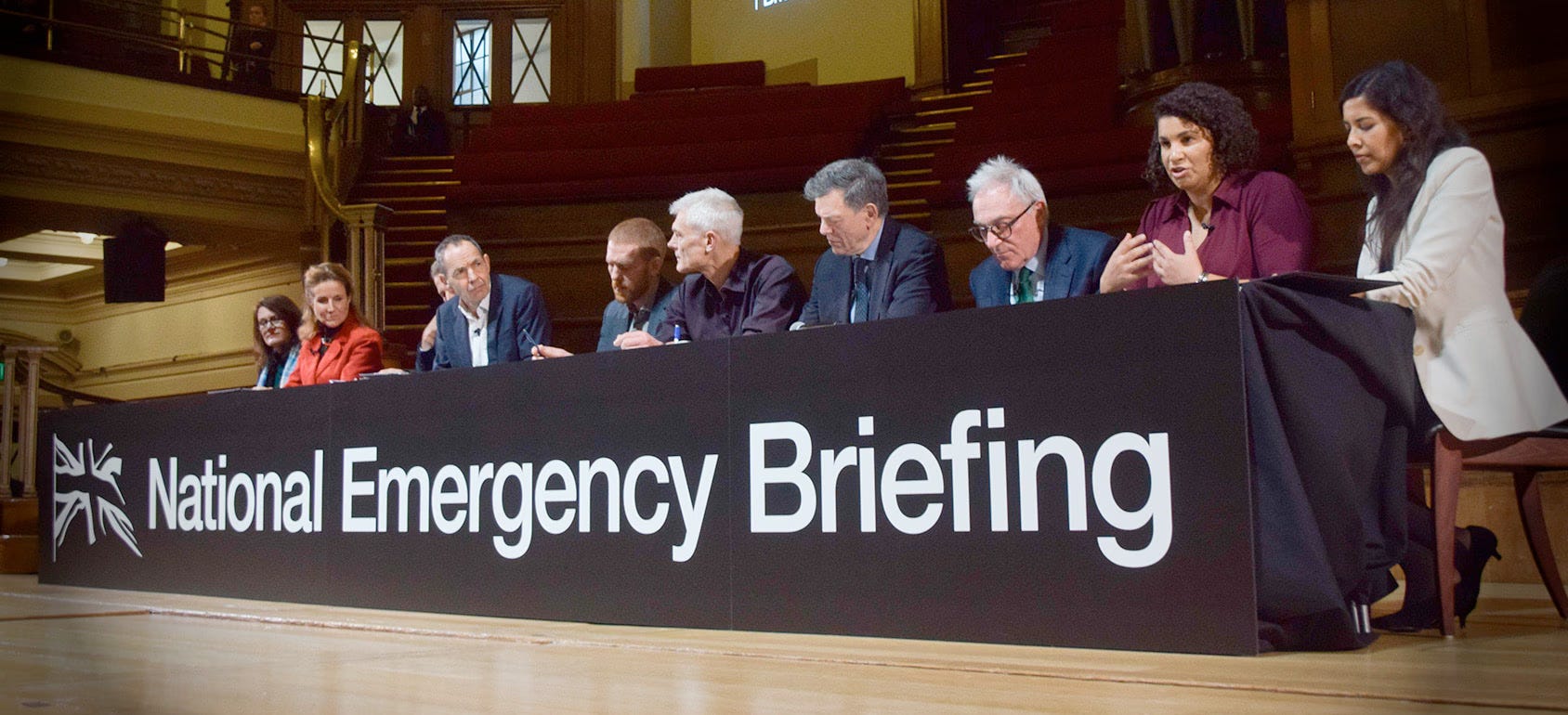
National Emergency Briefing
On 27th November, hundreds of MPs, Peers, and leaders from across culture, business, sport and faith gathered in Westminster for a National Emergency Briefing about the climate and nature crisis. Longstanding Declarer Julie Ward, coordinator of CDE North East, was at the briefing and wrote the following:
Nature and climate campaigner Chris Packham walked onto the platform of Westminster Central Methodist Hall and held up an image of Planet Earth on his mobile phone. “Earth is our only home,” he said to the 1300 or so audience. “We either learn to live in harmony with it or we destroy ourselves.” He urged politicians to heed the warnings of experts and give people real reasons for hope. It was a sobering prelude to a fact-filled morning designed to raise the alarm about the earth crisis unfolding in front of our eyes.
The organisers of this National Emergency Briefing (NEB) had managed to get approximately 150 MPs and peers into the room - some MPs who had legitimate business elsewhere had also instructed their parliamentary staff to attend. Politicians were under a lot of pressure to pay attention to this event which was taking place on their doorstep, a stones throw from the very building where climate policy is being hotly debated and our future decided.
The NEB came at a crucial moment for climate policy. A few days earlier COP30 had shamefully failed to name fossil fuels in the final agreed text, the result of heavy lobbying by the industry and intransigence from petro-states. Even as we convened in Westminster Hall, storm clouds were gathering in South Asia and torrential rain from cyclones and typhoons has subsequently caused devastation across multiple countries. In Sri Lanka flooding and landslides has displaced more than 1.1 million people.
In Westminster Hall, the NEB moderator, Prof Mike Berners-Lee, (founder of Small World Consulting), introduced leading experts whose stark warnings based on research and evidence, drew attention to the urgent implications for health, food, national security and the economy. Several of the speakers called for a Marshall-type plan reminiscent of post World War II. At times Berners-Lee asked us to take a minute to reflect on how we were feeling. I was sitting next to a GP who is part of Greener Practice. She was particularly attentive to Prof Hugh Montgomery who works in A&E, where he deals with emergencies and life and death situations on a daily basis. He shared that speaking honestly about survival was part of his training.
Despite the science-backed bleak predictions Berners-Lee reminded us that we have agency. “Hope is a discipline,” he said. “It relies on endeavour”. In Culture Declares Emergency we practice radical hope, and use our creativity in ingenious ways to explore the issues of climate and sustainability.
The event ended with an open letter to Keir Starmer, all public service broadcasters and Ofcom read out by Olivia Williams, calling for a televised emergency briefing to the public. Under the Communications Act 2003, all public service broadcasters must inform the public on major national and international issues. The UK has so far failed to meet these obligations. This is where we at Culture Declares Emergency can play our part, helping to explain and amplify the truth about the the earth crisis and offering ways for communities to take action. Meanwhile, please add your signature to the open letter and tell your friends.
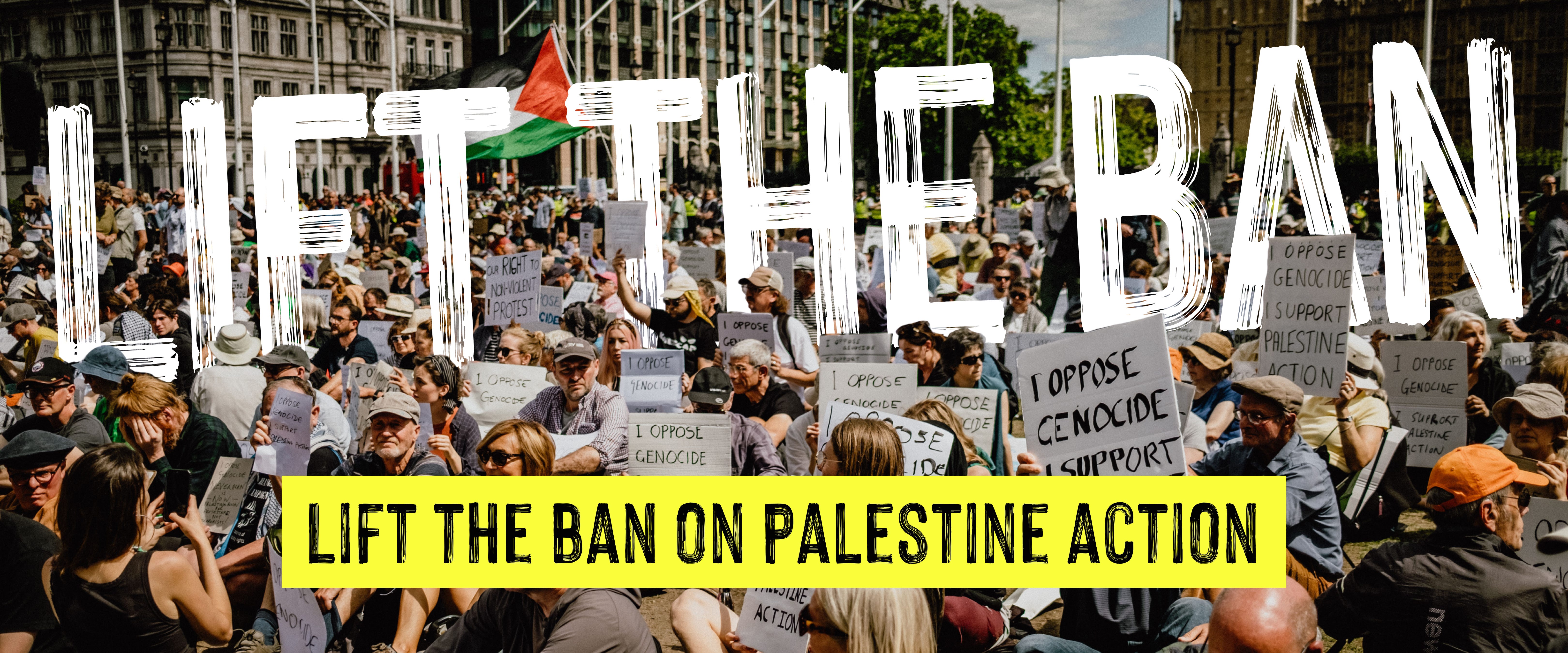
Judicial Review of Palestine Action Proscription
The Judicial Review over the ban on Palestine Action is underway. A message from Defend Our Juries: "We need to pile on the pressure to get this unjust ban overturned. You can help by sharing this beautiful film to all of your networks and encouraging others to do the same! Anyone who wants to receive regular updates can sign up at wedonotcomply.org as we wait out the result of the Judicial Review.”
Opportunities & call outs
What does leadership that centres the Earth, not as an abstract idea but as an embodied living presence, look like? Emergence Magazine are offering a fully funded Seeds of Radical Renewal Fellowship, an incubator for emerging leadership and creativity. They seek 25 folks in emerging or established spaces of leadership interested in working at the intersection of ecology, culture, and spirituality. Apply by 14 January 2026.
Submit your work to the Creative Climate Awards, an annual global competition and festival run by Human Impacts Institute. If selected, you will be invited to a month long exhibit in NYC, participate in special events, and have your work seen by their mentors. Submit by 2 February 2026.
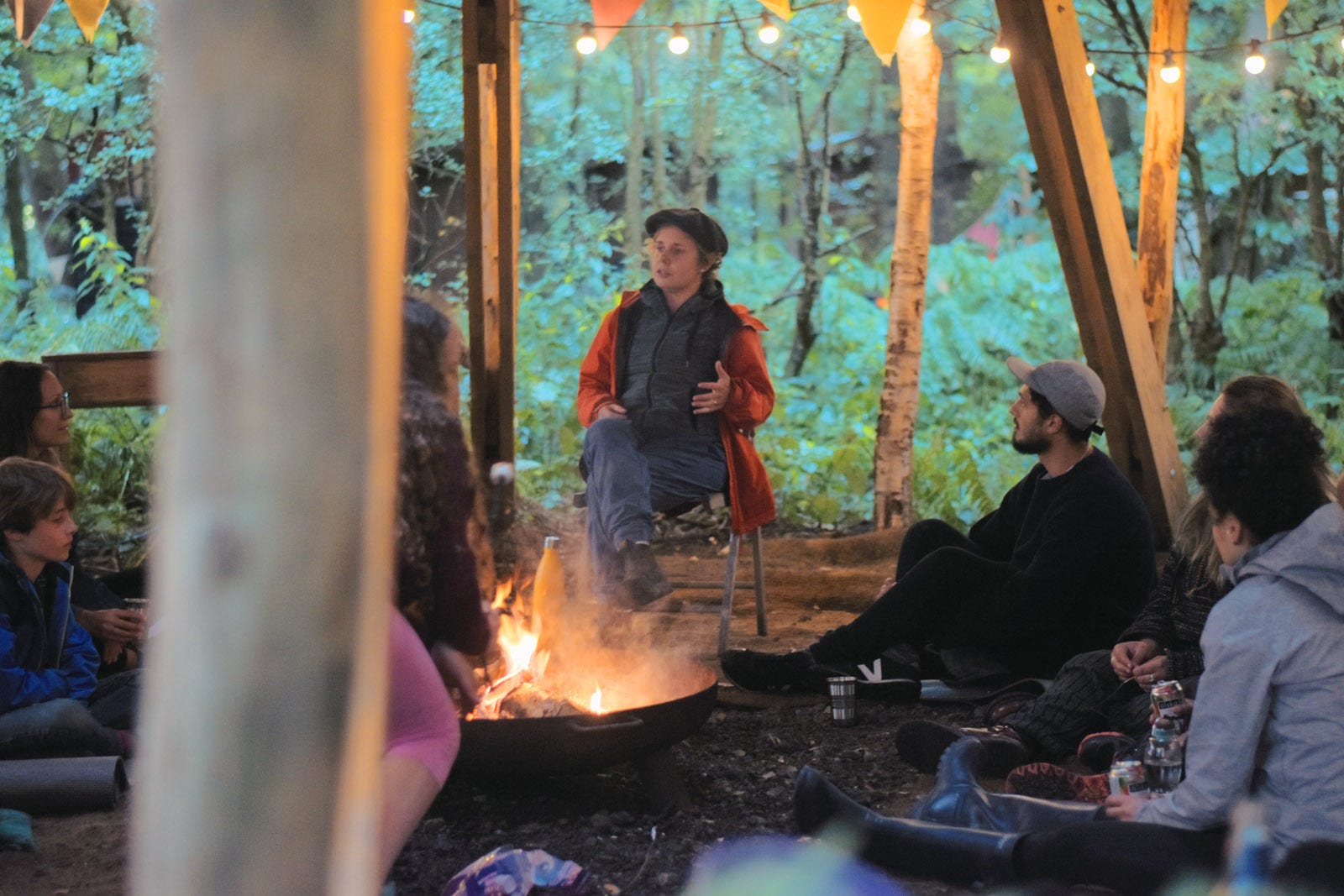
Wild Rumpus have opened applications for their Artist Retreat programme. Each year they welcome artists, makers and performers into their woodland creation space, providing time to connect with nature while developing their creative practice. Apply by 8 February 2026.
Reading, watching & listening
Gorgeous new publication from Outdoor Arts Portugal defends artistic creation as an integral part of public policies for urban and cultural development, and as a mechanism for listening, mediation, repair, and collective imagination. Chapter five on rural placemaking is written by our very own National Coordinator, Karine Décorne!
Embracing flow and letting rivers heal us - a conversation between Robert McFarlane and Willow Defebaugh on The Nature Of podcast
What we told UK leaders about climate and nature at a national emergency briefing - Paul Behrens in The Conversation
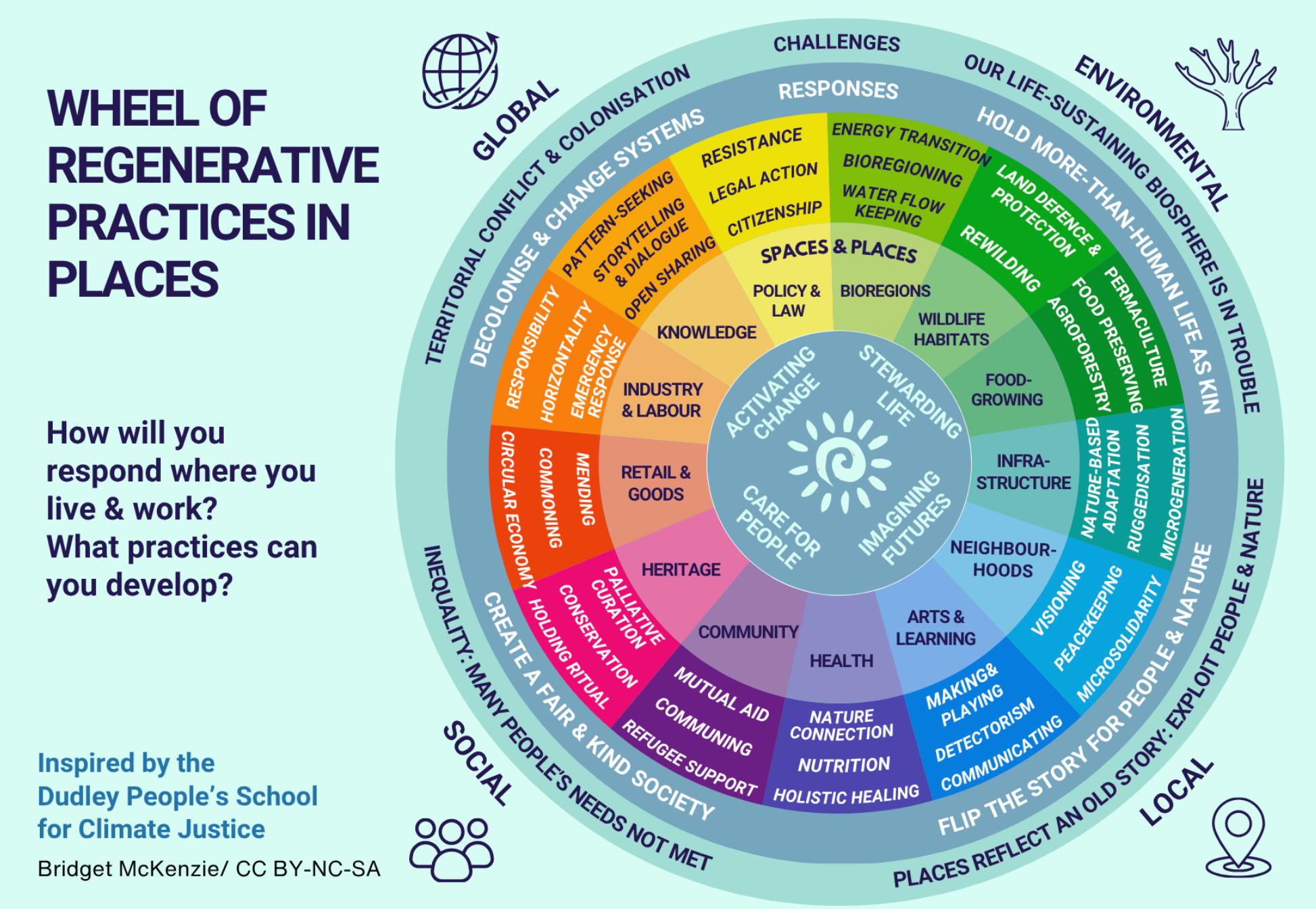
Regenerative Practices for Place - toolkit created by Bridget McKenzie (with some updated elements/ tools)
Article in Degrowth - Culture Declares Emergency calls arts and culture professionals to action - by Neus Crous Costa
Why we need new weird stories for a warming world - article in The Conversation exploring New Weird fiction, which imagines worlds where the human is no longer in control, where the nonhuman acts with agency and where our categories – living or dead, organic or artificial, natural or unnatural – start to blur
That’s all for now folks. Have a restful, connected turn of the year.
Tesni x